
Custom Metrics in Healthie
In addition to the default metrics included within the Healthie platform, you can add your own metrics that you would like to track for any or all of your clients.
IN THIS ARTICLE:
Add a New Custom Metric
- Navigate to the gear icon (top right corner) > Settings > Journal Entries
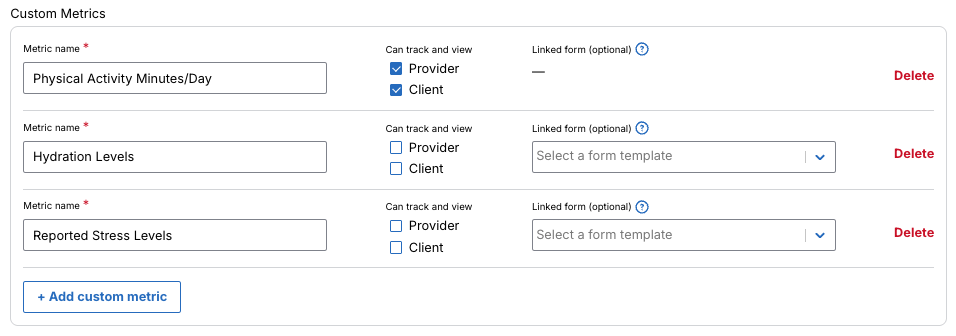
- Scroll down to the Custom Metrics section > click Add Custom Metric
- Give your metric a name under Metric name
- Set who can track and view the custom metric by checking the Provider and/or Client boxes
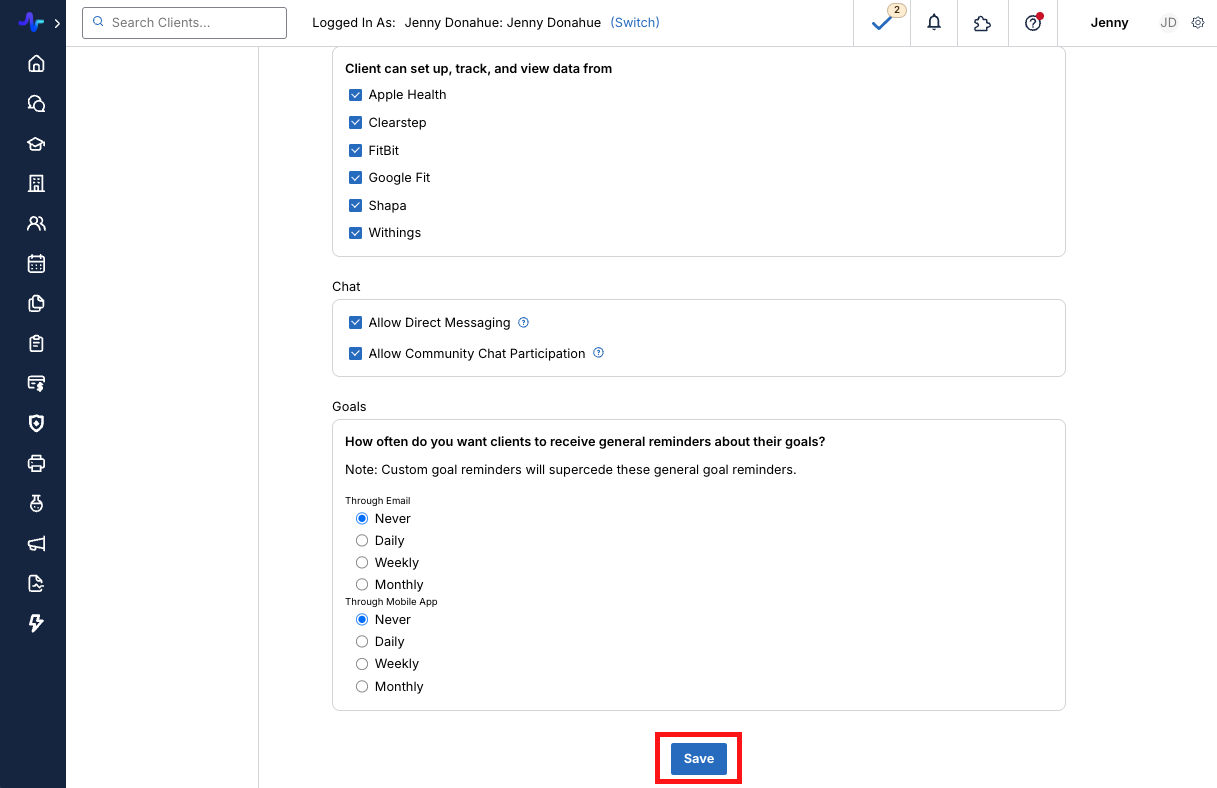
- Scroll to the bottom of the page and click the blue Save button
Link Custom Metrics to Auto-Score Forms
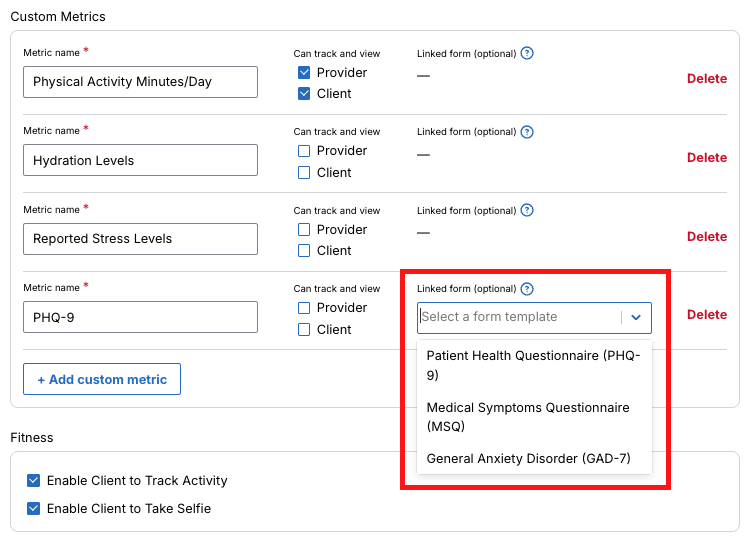
Healthie enables you to link a custom metric directly to an auto-score form. When a client completes a form with automatic scoring enabled (e.g., PHQ-9 or GAD-7), the form's score will automatically populate into the linked custom metric. To link a custom metric to an auto-score form:
- Follow the steps above to add a new custom metric
- When adding the metric, select the desired auto-score form from the Linked form dropdown (all auto-score forms in your Healthie Forms Library will display in the dropdown)
- Click the blue Save button at the bottom of the page
- In order to add or change a linked form within an existing custom metric, you will need to Delete the metric and re-add it
The date tied to custom metric entries is the date that the auto-score form was completed.
Important Notes:
- An auto-score form can only be linked to one custom metric.
- Forms completed before the custom metric was linked to a form will not automatically appear in the custom metrics graph. However, if a provider edits or re-saves an existing form submission, the metric will then populate in the graph and it will display the forms' original completion date.
- Custom metrics linked to auto-score forms cannot be added to forms, as the score is populated automatically and not by manual entry.
The PHQ-9 and GAD-7 auto-score forms are already available to you within your Healthie Forms Library. Learn more about auto-score forms here.
Common Metrics Added within Healthie
Any health or wellness value that can be quantified can be added as a custom metric. Some most commonly added metrics include:
- Sleep (hours)
- Stress levels (rated 1 - 10)
- Hydration (cups per day, est.)
- Blood Glucose
- Hemoglobin a1C
- Cholesterol
- Triglycerides
- Vitamin levels (ie. Vitamin D, B12, B6, Iron)
View Custom Metrics within Healthie
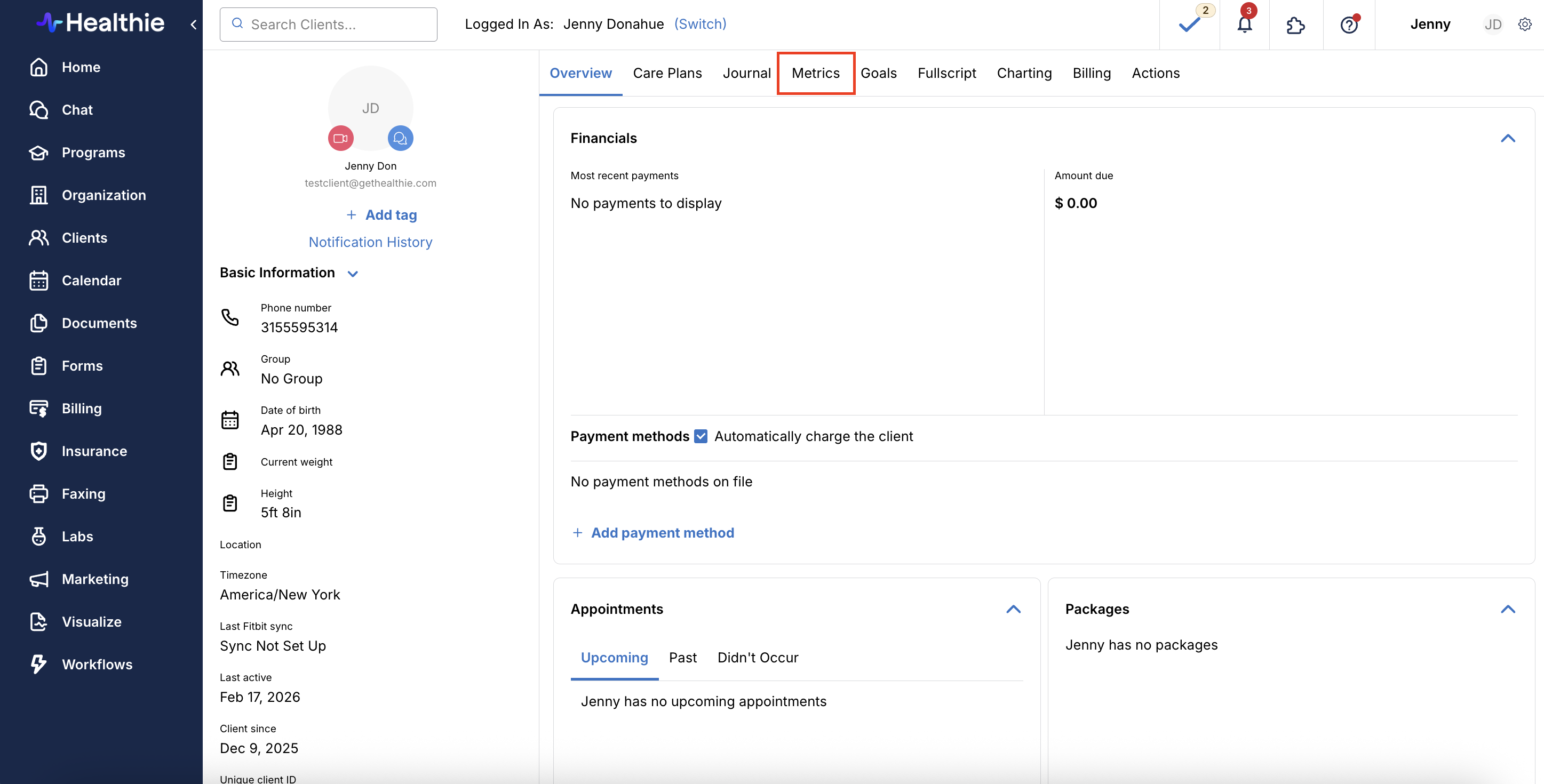
Providers can view custom metrics by navigating to Clients > locating the client > Client Profile > Metrics.
Clients can view custom metrics directly from their Dashboard > Metrics or Metrics (Graphs)
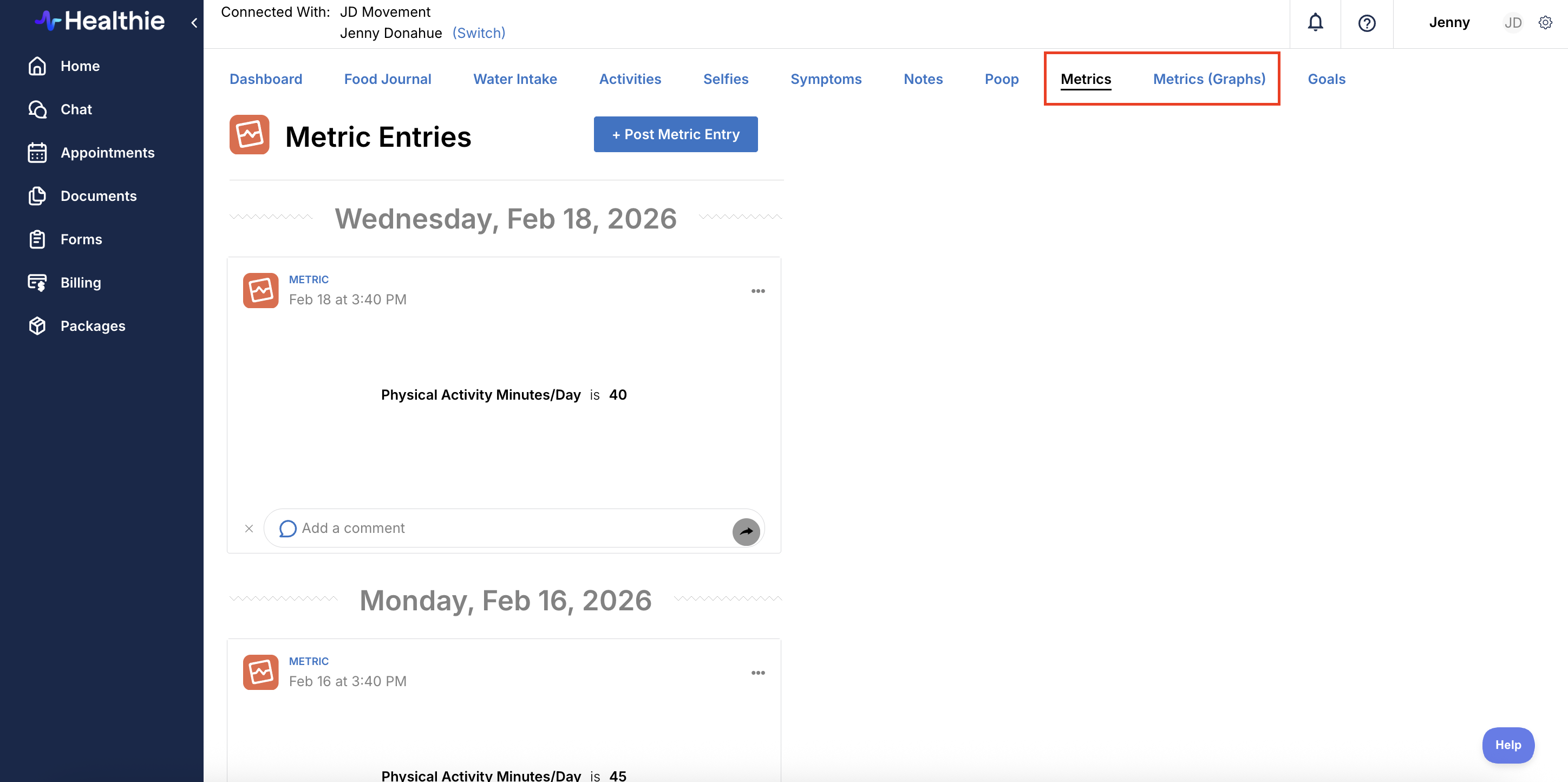
Adjust Who Can View/Track a Custom Metric
In some instances, you may want to "hide" a metric from your client's view - or disable them from tracking, so as to not affect the data you have stored.
To adjust these default settings on a global level (for all of your clients)
Please note that "Global" settings refer only to all clients under a single provider, not the entire organization.
- Navigate to the gear icon near your profile picture within Healthie
- Select Settings > Journal Entries
- Scroll down to the Custom Metrics section
- Check or uncheck the Provider and/or Client boxes next to each metric
- Scroll down to the bottom and click the blue Save button
For example, checking the "Client" box will allow clients to see all past entries for this metric, and allow them to add a new entry. When done on the global level, these settings will apply to all clients (existing and future) assigned to you, unless otherwise overridden. If you have adjusted these settings for a particular client through their client profile, group settings, or a Care Plan, changing the global settings will not override those higher-priority existing settings.
Adjust Metrics Settings for an Individual Client:
- Click on the Client's profile > Actions > Settings
- Scroll down to the Custom Metrics section
- Adjust a client's particular settings by checking/unchecking the metrics you'd like them to track
- Click Save

Custom Metrics for Organizations
If you'd like custom metrics from team member(s) to display in Form Builder, and be available to other organization members, admins can adjust the team member(s) settings to enable the setting "Shares Custom Metrics with the Entire Organization."

Does your organization need help adding your custom metrics? Send us an email to hello@gethealthie.com for more support.